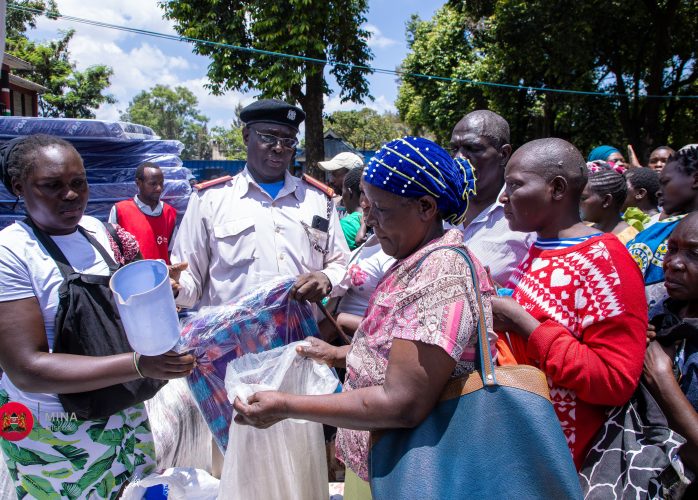
Heavy rains and flooding continued to affect large parts of Kenya, with the Government coordinating a multi-agency response to mitigate impacts on lives and livelihoods. As we close on March 2026, 30 counties have been affected by the ongoing floods, representing over half of the country’s 47 counties.
The death toll stood at 110, with three people still missing and over 34,150 people displaced from their homes. Nairobi recorded the highest number of fatalities followed by the Eastern region and the Rift Valley. The affected counties include Nairobi, Kisumu, Narok, Kiambu, Migori, Siaya, Makueni, Busia, Wajir, Kisii, Homa Bay, Taita Taveta, Baringo, Kajiado, Kitui, Kwale, Machakos, Kericho, Embu, Tharaka Nithi, West Pokot, Vihiga, Bungoma, Mandera, Kiambu, Kirinyaga, Uasin Gishu, Nyandarua, Kilifi and Nyeri.
Floodwaters have damaged residential areas, farmlands, markets, roads, bridges, water supply systems, power lines, and schools in many of these locations.
Teams drawn from the Kenya Defence Forces, National Disaster Operations Centre, National Disaster Management Unit, Kenya Redcross, Kenya Coast Guard, NPS, NGAOs, KENHA, KURA and County governments are actively conducting rescues, providing temporary shelter, and delivering relief support to displaced families.
The Kenya Meteorological Department has warned of continued heavy rainfall, flash floods, and storm hazards in the coming days with regions on high alert including Nairobi and its environs (particularly low-lying and informal settlements), Nyanza and Western regions (riverine areas along river Nyando and Nzoia), Rift Valley (including Baringo, Narok, Kericho and low-lying zones), Eastern and North Eastern regions (such as Wajir, Garissa and Isiolo), and the Coastal region (Kwale, Kilifi, Taita Taveta and other low-lying areas